Development of Process Compressor Management & Simulation Software for Direct Reduction (DRI) Plants by TEPCO
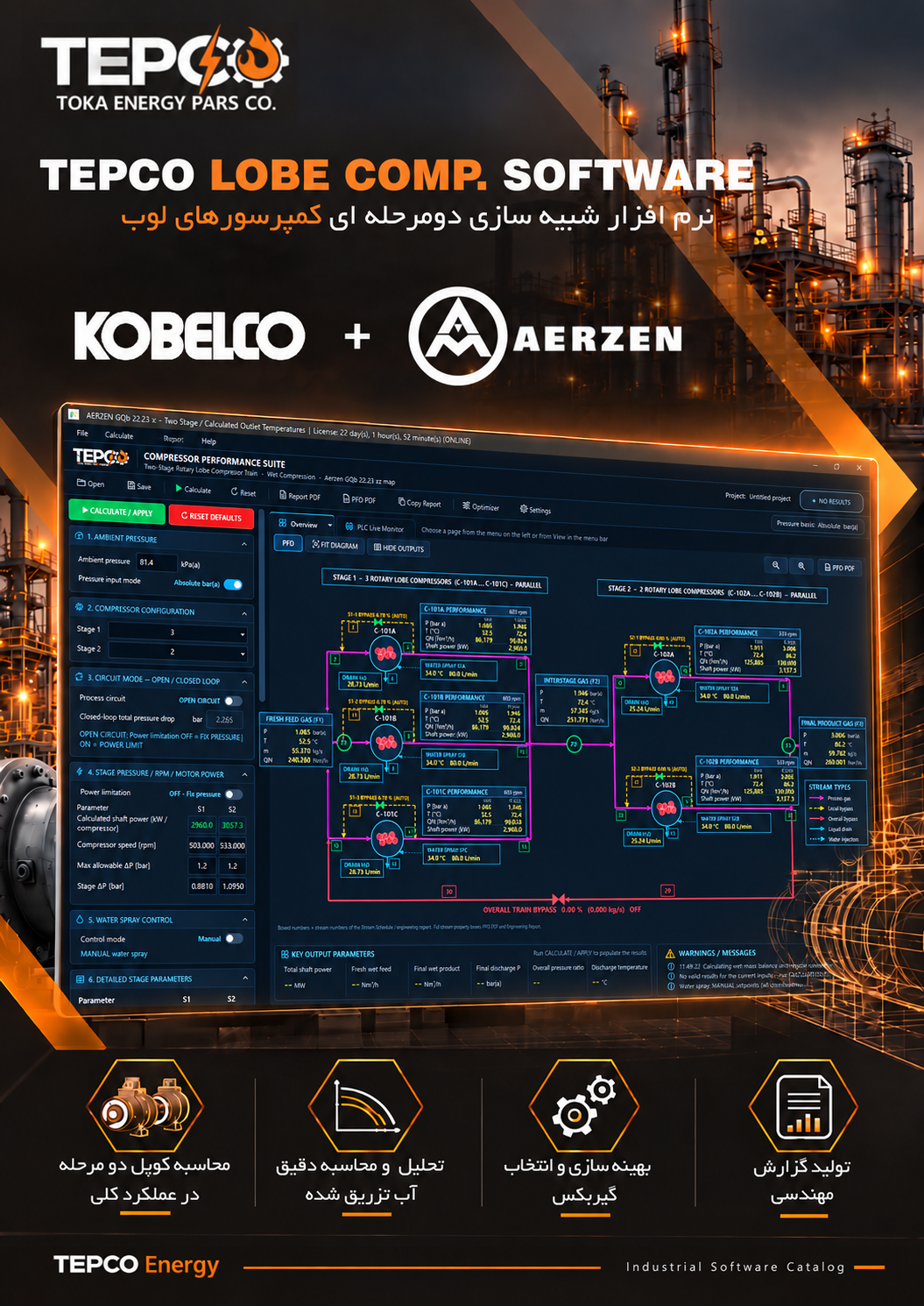
Toka Energy Pars (TEPCO), based at Sharif University of Technology’s Science and Technology Park, has developed a specialized industrial software platform for the management, performance monitoring, and thermodynamic simulation of process gas compressors (Lobe Compressors) in Direct Reduced Iron (DRI) steel plants.
Role of Process Gas Compressors in Direct Reduction Plants
In direct reduction plants, multi-stage process gas and lobe compressors maintain stable pressure and flow of reducing gas across the process loop. Variations in suction conditions, inter-stage cooling temperatures, discharge pressure, and rotational speed (RPM) directly affect specific energy consumption, plant throughput, and mechanical reliability.
Key Capabilities of the TEPCO Compressor Management Software
Engineered with a dark industrial HMI layout aligned with standard plant control systems (PLC/DCS), the software provides process and maintenance engineers with nine core capabilities:
- Multi-Stage Thermodynamic Circuit Modeling: Real-time calculation of pressure, temperature, mass flow, and volumetric flow across all nodes of single-stage and two-stage lobe compressor circuits.
- Independent Stage Speed (RPM) Configuration: Full simulation of variable rotational speeds (RPM) across compressor stages to evaluate flow delivery, pressure ratios, and shaft power demand.
- Intercooler and Aftercooler Performance Analysis: Evaluation of heat exchanger thermal duty, cooling water requirements, and inter-stage pressure drops under varying ambient conditions.
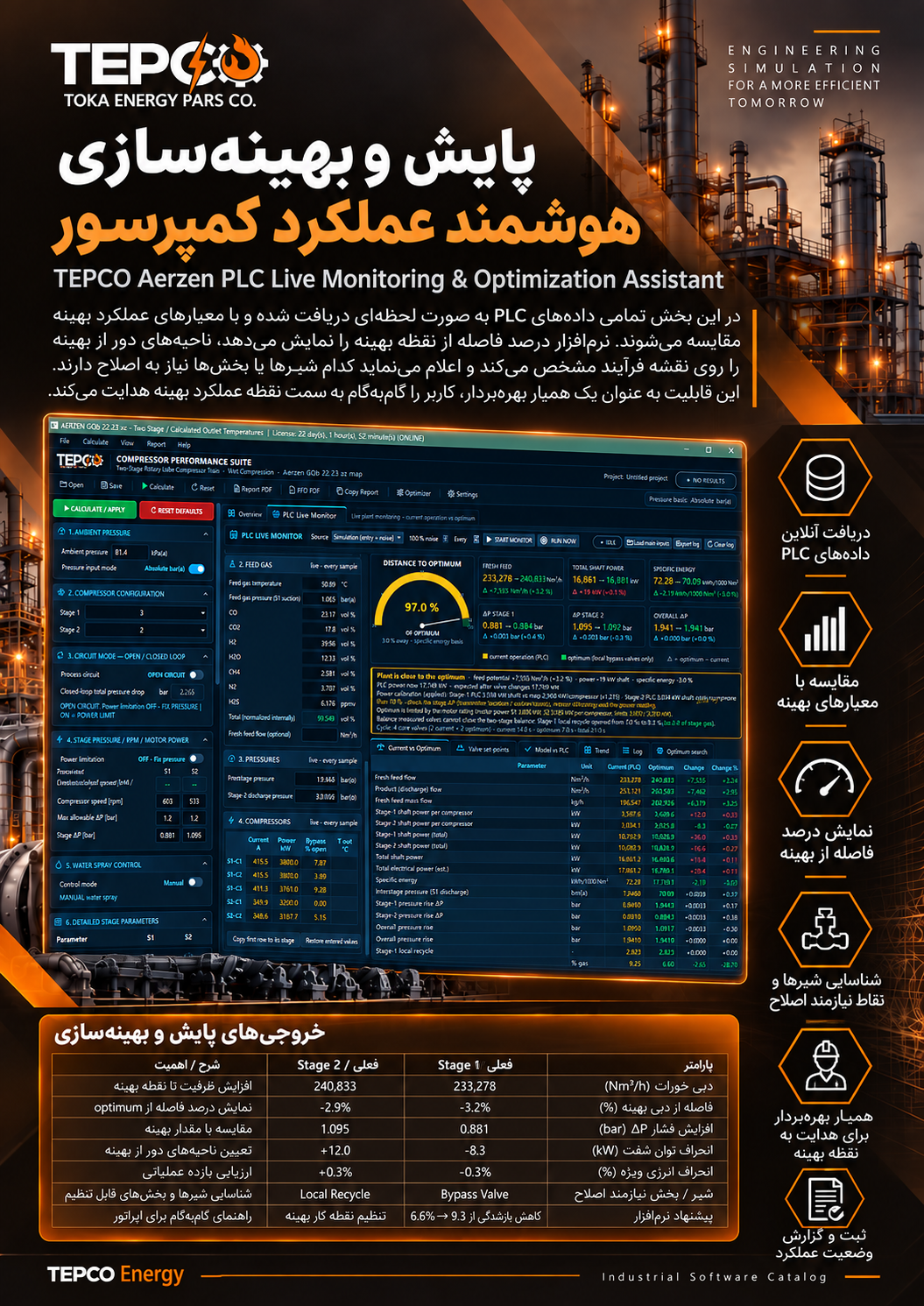
- PLC and Control Room Integration Readiness: Industrial PFD interface structured to mirror PLC process tags, enabling side-by-side comparison of live operating data against design baselines.
- Motor Power and Energy Optimization: Precise calculation of adiabatic power, brake horsepower, and motor load to minimize electrical consumption across operating regimes.
- Operational What-If Scenario Simulation: Pre-execution testing of gas composition shifts, inlet pressure variations, and VFD speed adjustments before applying changes on the plant floor.
- Condition Monitoring and Fault Diagnostics: Early detection of volumetric efficiency degradation, abnormal discharge temperatures, or cooler fouling against OEM reference curves.
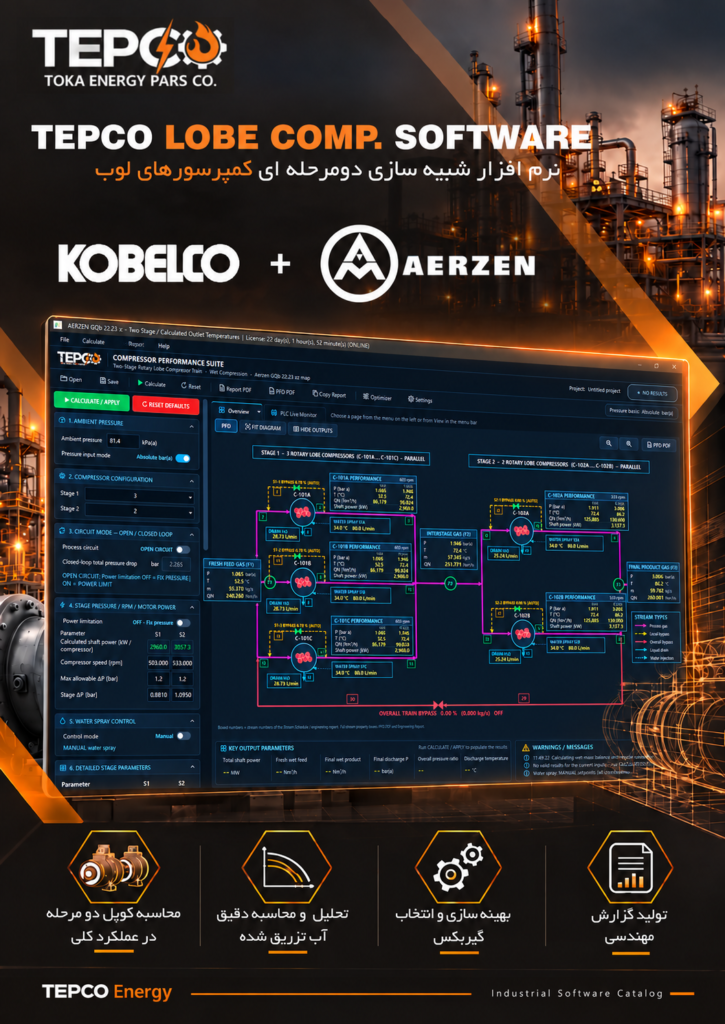
- Interactive Process Flow Diagram (PFD) Interface: Color-coded visualization of process gas lines, inter-stage equipment, motor states, and tabular node summaries.
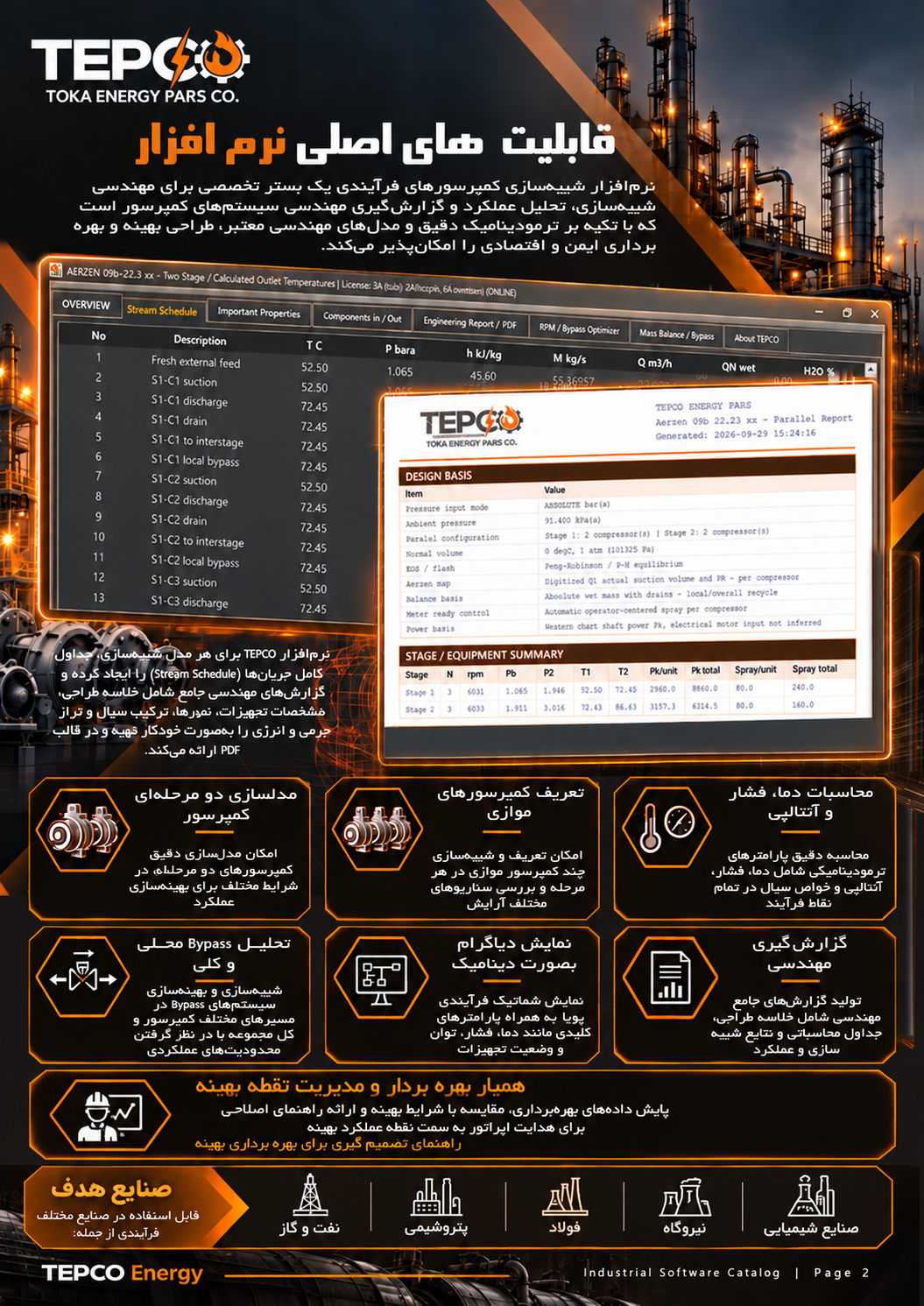
- Automated Engineering PDF Report Generation: Instant export of complete input parameters, stage-by-stage performance tables, and process diagrams into standardized PDF engineering reports.
Operational Benefits for Steel & DRI Plants
- Higher operational reliability and process stability for critical rotary compression trains
- Reduced specific energy consumption through optimized RPM staging and inter-stage cooling
- Data-driven engineering support for plant revamps, troubleshooting, and overhaul planning
Software Interface Gallery